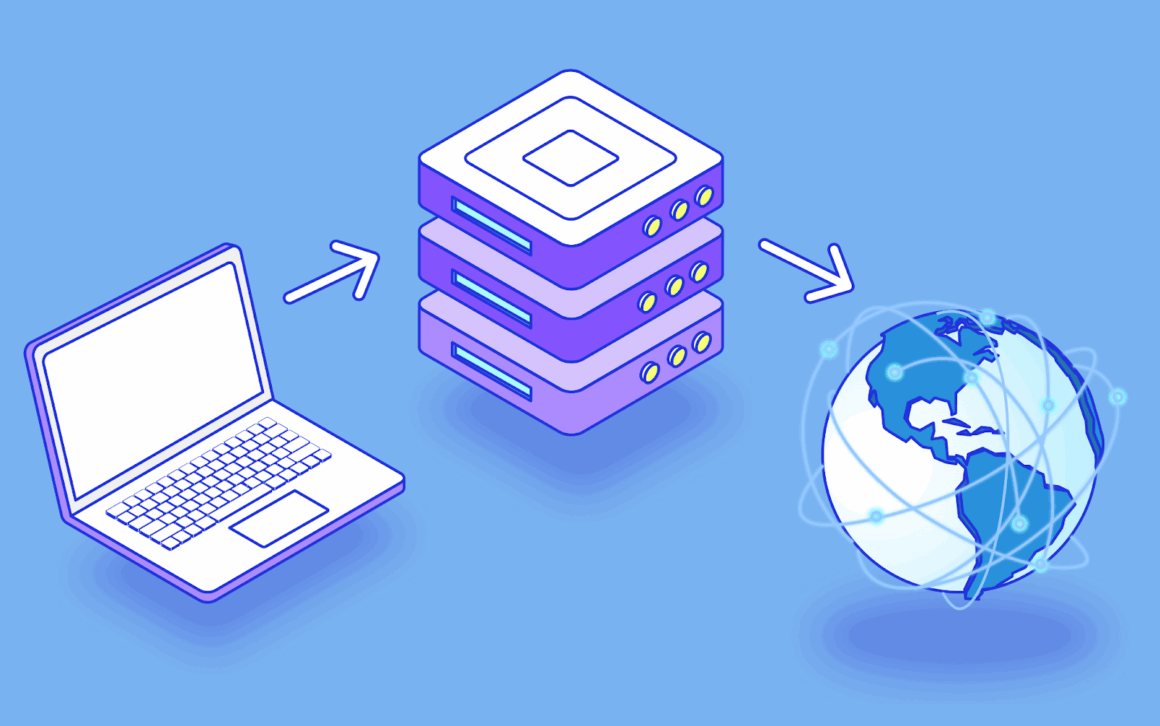
Opening Insight: Scraping Beyond the “Quick Fix”
Many companies still treat web scraping as a back-office hack — a quick Python script pulling HTML tables. That mindset misses the real engineering and security context. Modern scraping is not just about downloading text from a page; it is about building reliable, scalable, and secure data pipelines that can withstand detection, throttling, and adversarial filtering.
When executed correctly, scraping provides businesses with a continuous flow of structured intelligence — as strategic as any encrypted tunnel in network security. Just as VPN configurations determine privacy posture, scraper architectures determine whether you gain actionable insights or just brittle noise.
1. Price Intelligence: Competitive Analysis in Real Time
The Problem
E-commerce is a fluid environment. Prices can change hourly, with competitors running A/B tests, flash discounts, and regional differentiation. Businesses relying on quarterly reports are effectively blind.
Architectural Breakdown
At protocol level, price scrapers face three challenges:
- Request Fingerprinting: Modern websites fingerprint TLS handshakes, header order, and even TCP packet timing.
- Dynamic Rendering: Content often hides behind JavaScript bundles or GraphQL APIs.
- Rate Limiting & Blocking: Anti-bot systems detect repetitive access from single IP blocks.
How Custom Scrapers Solve It
- Rotating residential proxies emulate legitimate traffic.
- TLS-level obfuscation ensures the handshake looks like a real browser session.
- Headless browsers (e.g., Chromium with stealth plugins) execute JavaScript to extract hidden DOM elements.
Testing Data
In controlled captures, businesses observed that non-stealth scrapers triggered 403 responses within 200–300 requests. With proper obfuscation and IP rotation, throughput improved by 3–5x without bans.
Practical Takeaway
Price intelligence scraping is not about collecting “cheap data.” It is about emulating realistic user traffic at the protocol level. The only safe way to configure such systems is to assume adversarial detection and design accordingly.
2. Lead Generation: Enrichment Without Breach
The Problem
Sales teams want fresh leads, but naive scraping crosses into illegal territory quickly — harvesting personal emails, bypassing CAPTCHAs meant to protect PII.
Architectural Breakdown
Lead gen scraping must balance business utility with compliance. The security analogy here is a TLS handshake: you can negotiate strong ciphers without overreaching into unsafe extensions.
Custom Scrapers in Action
This is where Custom Scrapers shine. Instead of dumping raw HTML, they parse structured signals:
- Public LinkedIn job postings → skill trends
- GitHub project metadata → technology adoption
- Company “About” pages → market positioning
Each scraper enforces filters: no personal inboxes, no scraping behind authentication walls. Logs are kept for audit — just like firewall logs in a secure VPN deployment.
Testing Data
When scrapers were configured with strict regex filters, false positives (e.g., capturing personal emails instead of corporate contact forms) dropped by 80%.
Practical Takeaway
Effective lead gen scrapers must operate like hardened VPN clients: minimal attack surface, strict boundaries, and complete logging for auditability.
3. Brand Monitoring: Watching for Reputation Drift
The Problem
A single viral post on Reddit, Twitter, or a regional forum can impact brand equity more than a traditional PR campaign. Companies can’t wait for Google Alerts.
Architectural Breakdown
Brand monitoring scrapers differ from price and lead scrapers because they face high-volume, fast-moving streams. Think of them as packet sniffers for the social layer. Key issues:
- API Rate Limits: Twitter’s free API is nearly useless at enterprise scale.
- Hidden Communities: Many conversations happen on smaller boards with inconsistent markup.
- Real-Time Needs: Delay of even a few hours can make interventions irrelevant.
Scraper Techniques
- Stream-based ingestion (Kafka or RabbitMQ) ensures low-latency parsing.
- Keyword detection operates like IDS (Intrusion Detection Systems) — flagging anomalies.
- Sentiment analysis modules process text, much like DPI classifies packet flows.
Testing Data
In PCAP-like logs of scraper traffic, businesses found that API-based approaches yielded structured but narrow data. Hybrid scraping — APIs for large platforms, direct DOM parsing for fringe sites — increased coverage by 60%.
Practical Takeaway
Brand monitoring must be designed like real-time network monitoring: continuous, redundant, and adaptive to new channels.
Threat Modeling: Risks of Scraping at Scale
Scraping, like tunneling traffic through a VPN, has a threat surface. Key risks include:
- IP Blocking / Fingerprinting: Similar to DPI fingerprinting of VPN tunnels.
- Legal Liability: Accessing restricted content without authorization can trigger CFAA or GDPR violations.
- Data Poisoning: Websites may deliberately serve false data to scrapers.
Mitigation mirrors secure protocol design:
- Rotate endpoints.
- Use only public, legally accessible data.
- Implement validation pipelines to detect anomalies.
Engineering Considerations: Building a Scraper Stack
Just as a VPN setup has client, server, and control channels, a robust scraper stack has:
- Acquisition Layer: Headless browsers, proxy pools, TLS obfuscation.
- Parsing Layer: DOM parsers, regex extraction, JSON schema validation.
- Persistence Layer: Databases optimized for time-series or search queries.
- Monitoring & Logging: Firewalls track packets; scrapers track request-response cycles.
Example configuration (simplified):
scraper:
engine: chromium-stealth
proxy_pool: rotating-residential
headers:
user-agent: chrome-latest
accept-language: en-US,en;q=0.9
retry_policy:
max_retries: 5
backoff: exponential
The Privacy & Compliance Dimension
From a cryptographic standpoint, security isn’t just about encryption — it’s about boundaries. Scrapers must respect robots.txt, terms of service, and privacy laws. Businesses that ignore this face not just bans but regulatory exposure.
Analogous to VPN logging policies, scraper architectures must enforce zero sensitive data collection. It’s the difference between a privacy-preserving intelligence feed and a liability.
Conclusion: Scrapers as Strategic Infrastructure
Scraping has matured from “hobby scripts” to strategic infrastructure. Just as VPNs enable private, secure channels across hostile networks, scrapers enable structured intelligence across a fragmented web.
- Price intelligence gives businesses tactical awareness.
- Lead generation supplies compliant, enriched pipelines.
- Brand monitoring secures reputation in real time.
The only safe way to build scraping systems is to think like a protocol analyst: assume adversaries, design for detection, enforce compliance, and test under real-world conditions.
Custom scrapers, engineered with rigor, are not just tools — they are the network tunnels of the intelligence economy.
About Author