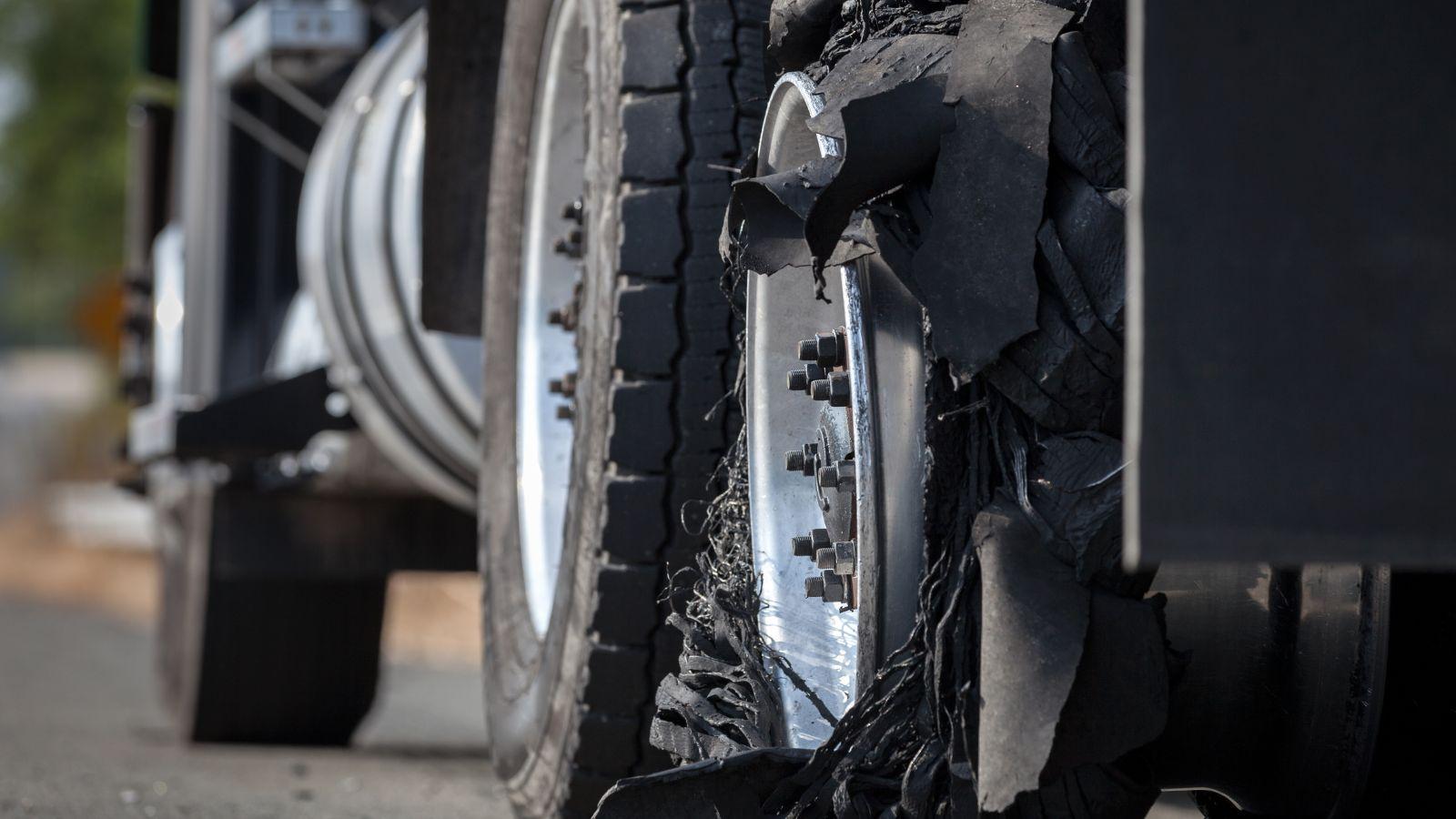
A blown-out tire can be a dangerous situation for a personal vehicle that weighs only a fraction of what a commercial truck does. The same applies to another commercial vehicle that’s likewise large and hauling a heavy load. If you’re involved in one of these incidents, as a driver or passenger, an experienced truck accident lawyer like the attorneys at Thomas Law Offices can determine if anyone was responsible.
How a Tire Blowout Can Lead to an Accident
Once a tire blows out, the truck driver has seconds to react. Unfortunately, even a cautious, skilled driver may struggle to prevent an accident in this case because the truck becomes more difficult to control. The driver may notice that it’s pulling sharply to one side. It may become difficult to steer, and braking suddenly may make matters worse by causing the vehicle to become unstable or slide. If the truck’s operator reacts too much and tries to overcompensate, the truck could end up in the other lane, hit another vehicle, or exit the roadway. The truck could jackknife or rollover. This is particularly the case if it’s traveling at high speeds.
While commercial trucks vary in size and the weight depends on the vehicle itself and what it’s hauling, in the U.S., a fully loaded semi-truck can weigh up to 80,000 pounds. Imagine the devastation a vehicle that heavy could cause if the driver lost control.
How a Tire Blowout Happens
Tires are designed to carry heavy loads. However, certain factors, some of which are from human errors, can contribute to tire failure. For example, if the driver doesn’t maintain and inspect the tires regularly, worn tread, especially when they’re carrying a heavy load, can cause the tire to separate, overheat, or rupture.
The average commercial vehicle’s tire pressure is between 95 and 120 PSI. An underinflated tire may experience damage from excessive heat as the vehicle is moving, while an overinflated tire is vulnerable to a blowout from hitting road debris or a pothole. The driver and/or the company, depending on how the maintenance tasks are assigned, is responsible for checking the tire pressure as needed and on a regular basis.
Road hazards such as construction materials, broken pavement, or items that fell from another vehicle can puncture the truck’s tire.
Anything a truck hauls can’t exceed the weight restrictions. It also can’t be unevenly dispersed in the truck, or one or more tires may support more weight than they should.
If a truck is traveling long distances or the temperatures are high in the area, which adds to the heat the tires already experience while in motion, they’re susceptible to rupturing.
Sometimes, the problem lies with the tires themselves. A manufacturing defect isn’t always obvious, so even if the trucking company and driver are on top of maintenance, a tire can burst unexpectedly. Some examples of defects that can lead to tire failure include:
- Tread separation from improper bonding
- Damaged or weak internal belts
- Sidewall defects
- Bead defects
- Inconsistent rubber compounds from poor mixing or curing
Who Could Be Held Accountable
The responsible party for the accident depends on the circumstances of your case, and these are some examples:
The Driver or the Trucking Company as a Whole
The driver may be at fault for the accident if they were the one responsible for maintaining the tires. However, if the company was responsible for this task, it could be held accountable.
A truck accident lawyer may find the driver at fault if the tire separated, and the accident could have been prevented with a proper response.
The State Government
While it’s difficult to prove, the state can be found liable if the roads weren’t properly maintained, which caused the accident.
The Tire Manufacturer
In a case where there was a tire malfunction from a defect, the manufacturer is the one responsible for your accident.
The Auto Repair Company
The repair shop used by the trucking company could be to blame if they weren’t properly maintaining the vehicle or overlooked something during the last inspection.
The Cargo Loading Company
When the problem lies with an overloaded or unevenly loaded truck, the cargo loading company may be at fault.
How a Law Firm Establishes Liability
Even if you aren’t sure who bears liability for your accident, a truck accident attorney will listen to your case and consider the specifics. Through investigation, the attorney can determine who — if anyone — is liable.
While the police report plays a role, the evaluation goes more in-depth and will consist of looking at truck maintenance logs, looking at the driver’s logs, and checking dashcams and event data recorders (black box recorders).
The lawyer will look into the driver and their CDL history, violations, and training. Part of evaluating the case includes seeing the repair history and maintenance schedule for the truck and assessing the company’s safety policies and compliance history.
Inspecting the vehicle and tires can provide valuable evidence. The law firm will specifically analyze the tread wear pattern and sidewall. The other part of this evaluation is looking for the following:
- Signs of overinflation or underinflation
- Signs of overloading or improper loading
- Signs the tire failure was preventable or happened suddenly
- Physical damage to the truck
Besides the vehicle, the law firm will also check out photos, skid marks, accident location, and roadway conditions.
Consulting experts and interviewing witnesses are part of the process in many cases.
Being involved in a truck accident caused by a tire blowout is a frightening ordeal since these commercial vehicles are often large and heavy. In certain cases, there may be a responsible party who neglected to adhere to truck safety in some way. A trucking accident attorney can establish whether someone is liable.
About Author